


Blog
CCI vs Federal Primers: Which Is Better for Accuracy?

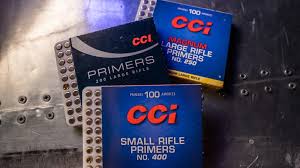
CCI vs Federal Primers: Which Is Better for Accuracy?
Table of Contents
-
Quick product query — which primer improves accuracy more?
-
What are CCI and Federal primers?
-
How do primers affect accuracy?
-
Are CCI primers better than Federal for match loads?
-
When are Federal primers the smarter choice?
-
How should you test primers to decide (step‑by‑step)?
-
How should you store and handle primers safely?
-
Where to buy CCI and Federal primers on Primereloaders.com
-
FAQs — quick answers (good for schema)
-
Final verdict — how to choose between CCI vs Federal primers
1. Quick product query — which primer improves accuracy more? cci primers accuracy
If you’re asking “CCI vs Federal primers: which is better for accuracy?”, the honest answer is: it depends. Both brands produce high‑quality primers — standard, magnum, and match variants — and which one will deliver the most accuracy for your loads depends on the cartridge, powder, brass, and the precision of your reloading process. Read on and I’ll show you practical testing steps to decide which brand works best for your rifle or pistol.
(Focus phrase: cci vs federal primers — we’ll use this to guide testing and product choices.)
2. What are CCI and Federal primers? federal match primers
What are primers and why brands matter?
Primers are the tiny, impact‑sensitive components that ignite powder inside your cartridge. Brands such as CCI and Federal produce primer lines with different formulations and tolerances: standard primers (e.g., CCI 300 / Federal 150), magnum primers (CCI 350 / Federal 155), and match primers (Federal Gold Medal 150M, Winchester/USA Ready match, CCI’s match offerings). When comparing cci vs federal primers, you’re comparing decades of manufacturing choices, QA practices, and product families built for specific uses.
Brand positioning (short):
-
CCI — widely used, consistent, strong reputation for reliable ignition and popular bulk primers for reloaders.
-
Federal — large product range, strong match primer lines (Gold Medal), and very popular in competition circles.
Both brands are reputable — the real test is how they behave in your specific load.
3. How do primers affect accuracy? for primer testing protocol
How can a tiny primer change groups?
Primers influence the ignition flame, timing, and consistency. These ignition characteristics affect the initial pressure curve and the way powder burns — and that can subtly change muzzle velocity, ES/SD (extreme spread / standard deviation), and vertical dispersion.
When you compare cci vs federal primers for accuracy, you’re mainly looking at:
-
Consistency (lot-to-lot and shot-to-shot)
-
Ignition energy / flame profile (standard vs magnum vs match)
-
Manufacturing tolerances (match primers are engineered to tighter specs)
If all other variables are already optimized (same brass lot, same bullet, precise powder charge), primer becomes one of the small remaining variables that can produce measurable gains — especially in competition settings.
4. Are CCI primers better than Federal for match loads?
Which brand usually gives tighter groups? — There is no universal law that says CCI always outperforms Federal (or vice versa). Instead:
-
For many benchrest and precision shooters, Federal Gold Medal match primers (e.g., 150M / 155M) are chosen because Federal markets them as match‑grade with tighter tolerances. That makes Federal a popular starting point when aiming for minuscule ES/SD improvements.
-
CCI has very consistent standard and magnum primers and is favored for reliable ignition and production reloading. In some rifles/load combinations, CCI will produce slightly lower ES/SD or a better point‑of‑impact — it varies.
So when you ask cci vs federal primers: which is better for accuracy?, the correct practical answer is: test both under controlled conditions in your rifle. Many shooters find Federal match primers give marginal improvements in .308/6.5/precision rifle work; other shooters prefer CCI for certain rounds and for pistol reloading reliability.
5. When are Federal primers the smarter choice?
When should you pick Federal?
Choose Federal primers when:
-
You want match‑grade tolerance (try 150M / 155M for pistols or equivalent match rifle primers).
-
The powder or published load specifically lists Federal match primers in tested data.
-
You care about lot traceability for team/competition use and want to control variables tightly.
Example: many precision rifle teams note Federal Gold Medal primers as part of a fully optimized recipe — they’re not magical, but their consistency can help when all else is equal.
6. How should you test primers to decide (step‑by‑step)?
A practical primer‑test protocol (how to decide between CCI vs Federal primers):
-
Pick one target load and control everything else. Use the same rifle, same barrel temperature, same powder lot, same bullet lot, same brass lot.
-
Choose two primer SKUs to compare. Example:
cci 300vsfederal 150. If testing magnum, usecci 350vsfederal 155. If you’re testing match options, usecci match(if available) vsfederal 150m. -
Start at published, safe charges. Don’t exceed recommended maxima.
-
Load 10–20 rounds per primer for a test string. Keep everything else identical.
-
Chronograph each string. Record average velocity, ES, and SD.
-
Shoot groups from a solid rest and measure group size and vertical dispersion.
-
Rotate through strings (primer A, primer B) several times to reduce environmental bias.
-
Analyze: the primer that gives lower ES/SD and tighter verticals in repeated tests is your winner for that load.
-
Repeat with different bullets/powders if needed — primer behavior can be load-dependent.
If you follow this test you’ll have a direct, reproducible answer to cci vs federal primers for your setup.
7. How should you store and handle primers safely?
Safety summary (short):
-
Store primers in original trays/boxes, in a cool, dry, ventilated location.
-
Keep box lot numbers; match reloaders often buy a full lot for testing.
-
Treat shipments as HAZMAT when shipping across provinces/states — expect adult signature.
-
Don’t mix lots during critical testing — lot changes can mask primer effects.
Image suggestion (paste into WP):
8. Where to buy CCI and Federal primers on Primereloaders.com
Here are example product/category links you can include (replace with exact live URLs if needed):
-
Primer categories:
https://primereloaders.com/category/primers -
CCI large pistol primers:
https://primereloaders.com/product/cci-300 -
Federal Gold Medal match primers:
https://primereloaders.com/product/federal-150m -
CCI magnum primers:
https://primereloaders.com/product/cci-350 -
Federal magnum primers:
https://primereloaders.com/product/federal-155
9. FAQs — quick answers (schema-ready)
Q: Do match primers always make a difference in accuracy?
A: No — match primers can reduce ES/SD and vertical dispersion in well-optimized loads, but the improvements are often small. Testing is the only reliable way to see if they matter for your rifle.
Q: Are CCI primers less accurate than Federal?
A: Not inherently. CCI vs Federal primers is a brand comparison — either can be more accurate for a specific load. Your testing will show which performs better for your setup.
Q: Should I always use magnum primers for big cases?
A: Only when load data or testing supports it. Magnum primers can change pressure and ignition characteristics; always start at safe published minimums.
Q: How many rounds should I test per primer?
A: 10–20 rounds per string is typical; more rounds increase confidence in the results.
10. Final verdict — how to choose between CCI vs Federal primers
When deciding cci vs federal primers, treat primers as a controlled variable in your reloading experiment — not as a guaranteed shortcut. In short:
-
If you’re chasing match‑grade consistency and want a brand widely used in competition, start with Federal Gold Medal match primers.
-
If you want proven, reliable ignition across a wide range of loads (and often at a better bulk price), CCI is an excellent choice.
-
The only objective way to answer cci vs federal primers for your rifle is to test both with an identical protocol (chronograph + group testing). The primer that gives the lowest ES/SD and tightest groups wins — for your load.